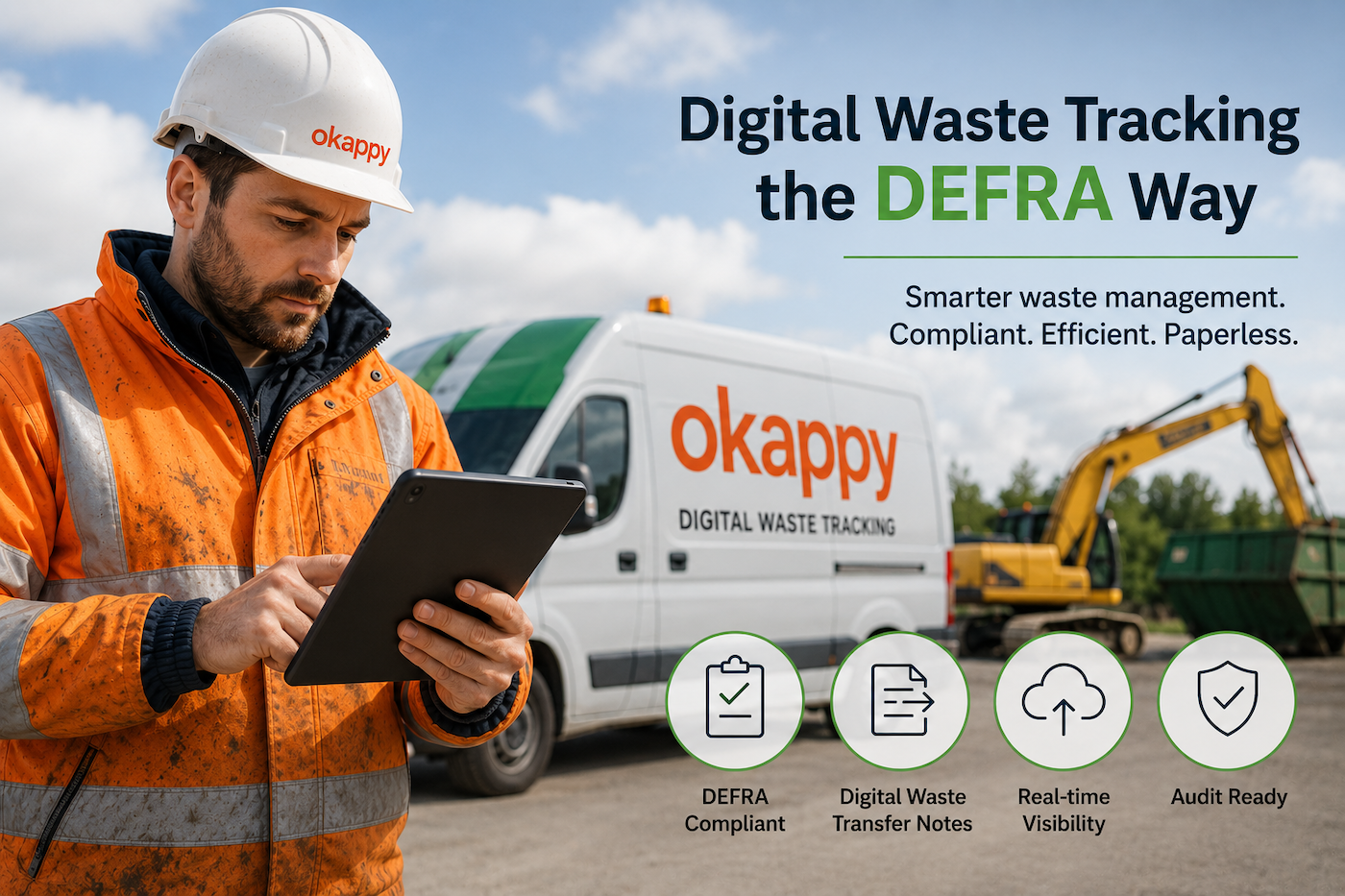
Digital Waste Tracking is no longer a distant policy idea. Defra, the Environment Agency and the devolved administrations are moving towards a mandatory UK-wide service designed to improve visibility over waste movements, reduce waste crime and replace parts of today’s paper-heavy reporting process.
For drainage contractors, waste carriers, facilities managers, construction companies and anyone responsible for arranging or receiving waste movements, this matters. Waste documentation is already a legal and operational requirement. The difference is that the direction of travel is now clear: records will increasingly need to be digital, structured and ready to share with regulators.
The good news is that businesses do not need to wait until the deadline to get organised. You can already create waste transfer notes in Okappy today. As Defra’s service develops, Okappy is working towards making it possible to export those records to Defra at the touch of a button.
A short history of Digital Waste Tracking
The UK government and devolved administrations consulted on mandatory digital waste tracking between January and April 2022. The aim was to replace fragmented, outdated records with a more consistent digital system for tracking controlled waste and extractive waste across the UK.
In October 2023, the government response confirmed the broad direction. Digital waste records are intended to replace existing requirements such as waste transfer notes and hazardous waste consignment notes where a waste movement record is required. The response also explained that the service should provide more timely and granular data than existing aggregated returns.
The programme has since changed shape. In February 2025, Defra announced a revised delivery approach following industry feedback. Rather than trying to launch a complete end-to-end system for every type of waste operator at once, the first mandatory phase will focus on permitted and licensed waste receiving sites.
The current GOV.UK guidance, updated on 28 April 2026, confirms that the public beta is now available for permitted waste receiving sites. The service becomes mandatory for waste receivers from October 2026 in England, Wales and Northern Ireland, and from January 2027 in Scotland. A later phase is planned for waste collectors, including carriers, brokers and dealers, with public beta from spring 2027 and mandatory use from October 2027.
Why government is doing this
The policy driver is simple: waste crime is expensive, damaging and difficult to police when records are incomplete or split across paper forms, spreadsheets and disconnected systems. GOV.UK states that waste crime and poor performing waste sites damage the environment, undermine legitimate businesses and cost the UK economy an estimated one billion pounds per year.
Digital tracking is intended to close the information gap. Better records should make it easier for regulators to understand where waste came from, who carried it, where it was received and whether the receiving site was authorised to accept it. That could support roadside checks, audits, investigations and earlier intervention where a site appears to be taking too much waste or the wrong type of waste.
For legitimate businesses, that should be a positive development. Operators who already do the right thing often compete against those who cut corners. A clearer digital trail should help raise standards and make it harder for rogue operators to hide behind weak paperwork.
The benefits for contractors and customers
For contractors, the biggest practical benefit is less admin duplication. If job details, waste details, carrier information, site information and customer approvals are captured digitally at the point of work, the record becomes easier to reuse for compliance, customer reporting and invoicing.
For facilities managers and construction teams, digital waste records support better duty of care. They make it easier to evidence what was collected, when, by whom and where it went. That matters on multi-site estates, framework contracts, reactive drainage jobs and construction projects where different contractors and subcontractors may be involved.
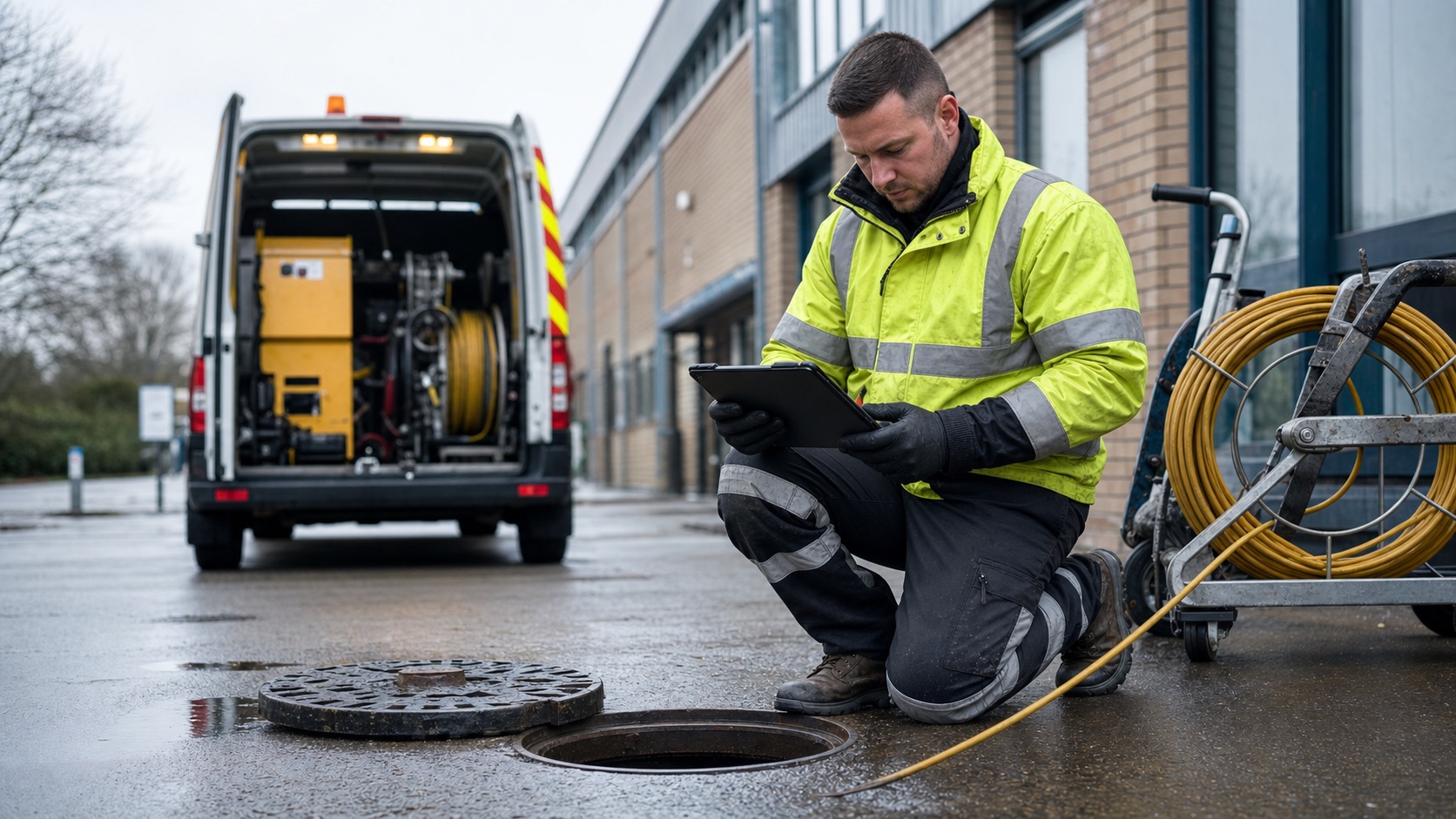
For drainage companies, this is especially relevant. Tankered waste, gully waste, interceptor waste, contaminated water and other site waste can involve urgent call-outs and multiple parties. If the record is only assembled after the event from handwritten notes, emails and phone calls, errors creep in. Digital capture reduces that risk.
The issues to watch
The change will not be painless for everyone. Defra’s own guidance recognises that manually creating records on a GOV.UK-style service can be time-consuming, especially where the same information is already held in commercial software. That is why the current approach puts strong emphasis on software integration through an API.
There are also timing and scope questions. Phase 1 focuses on permitted and licensed receiving sites, not every carrier or broker from day one. Exemptions are not included in phase 1. Green list waste exports and imports are planned for a future phase. Digitally excluded users will need an alternative mechanism. Some organisations will need time to map their existing forms, processes and systems to the new requirements.
Another issue is data quality. Digital records are only useful if the information is accurate. Waste descriptions, EWC codes, producer details, carrier details, receiving site details and weights all need to be captured consistently. The businesses that prepare early will have an advantage because they can tidy up their process before the deadline arrives.
How Okappy helps now
Okappy already helps contractors and their customers manage jobs, communicate with engineers and subcontractors, capture site information and keep a clear audit trail. For waste movements, you can already create waste transfer notes in Okappy, keeping key information connected to the job rather than buried in separate paperwork.
That is important because waste compliance rarely happens in isolation. It sits alongside job scheduling, site attendance, photos, signatures, customer authorisation, subcontractor updates and invoices. When those records live together, teams spend less time chasing missing details and more time doing the work.
For customers, this means clearer evidence and fewer gaps. For contractors, it means a stronger compliance trail and a more professional handover. For office teams, it means less rekeying and fewer disconnected spreadsheets.
What is coming next
As Defra’s Digital Waste Tracking service matures, the direction is towards API-based submission from existing software. That is exactly the kind of workflow contractors should want: capture the details once, use them for the job, create the waste transfer note, and then submit or export the required data without starting again.
Okappy’s roadmap is aligned with that direction. You can create your waste transfer notes in Okappy now. Soon, you will be able to export them to Defra at the touch of a button, helping you stay ahead of the new requirements without adding another layer of admin.
What to do now
Digital Waste Tracking is being introduced in phases, but the message is already clear. Paperwork-heavy processes are on borrowed time. Contractors, facilities managers and construction teams should start by reviewing how they capture waste information today, where gaps appear, and how easily they could produce a digital record if asked.
The best preparation is not panic. It is process. Capture the right information at the point of work, keep it connected to the job, and make sure your team is ready for digital reporting before it becomes mandatory.
Okappy can help you start that transition now.