Late payment has always been a frustration for contractors. But, as a recent BBC News report on tradespeople chasing debt shows, it is becoming a serious operational problem. The report cited a Direct Line Group survey which found that more than half of tradespeople had seen late payments increase compared with a year earlier. It also highlighted that many are now spending more time chasing invoices, agreeing payment plans or writing off debts altogether.
For mid-sized drainage companies, that will sound familiar. Drainage work is urgent, often reactive, and usually involves several parties: the customer, a site contact, a facilities manager, a main contractor, subcontractors, accounts teams and sometimes the end client. When information moves slowly between those people, payment often slows down too.
The result is pressure on everyone. Contractors carry the cost of engineers, vans, fuel, equipment, insurance and materials. Facilities managers and construction teams need evidence that work was completed properly before approving payment. A good system cannot remove every dispute, but it can remove many of the delays that allow invoices to sit unpaid.
Why late payment hits drainage companies hard
Drainage contractors rarely have the luxury of predictable, low-cost jobs. A blocked drain may turn into excavation. A CCTV survey may uncover collapsed pipework. A planned maintenance visit may need extra attendance or traffic management. Costs can change because the reality on site is not always what anyone expected when the job was booked.
That makes documentation essential. If the customer receives an invoice days or weeks after the work, with limited detail, questions arise: Who authorised the extra jetting? Where are the photos? Which asset was worked on? Was the issue resolved or only made safe? Has the main contractor signed it off?
Every unanswered question can become another email, another phone call and another delay. Meanwhile, the contractor has already paid wages, fuel and supplier costs. Across dozens or hundreds of jobs a month, late payment becomes a capacity and growth issue.
Facilities managers and construction teams are under pressure too
It is important to recognise the customer side of the problem. Facilities managers, housing providers, retailers, commercial landlords and construction companies are also being asked to control spend, prove compliance and justify every invoice.
If they do not have the right information, they cannot approve the invoice confidently. Often, they are waiting for evidence: job sheets, photos, signatures, asset details, completion notes, purchase order references or confirmation that the work matches the agreed scope.
This is where better collaboration helps. The faster a contractor can provide accurate, structured information, the easier it is for the customer to approve the work and release payment.
How Okappy helps drainage companies reduce payment delays
Okappy connects contractors, employees, subcontractors and customers on one platform. Instead of job details being scattered across emails, messages, spreadsheets and paper job sheets, everyone can work from the same live job record.
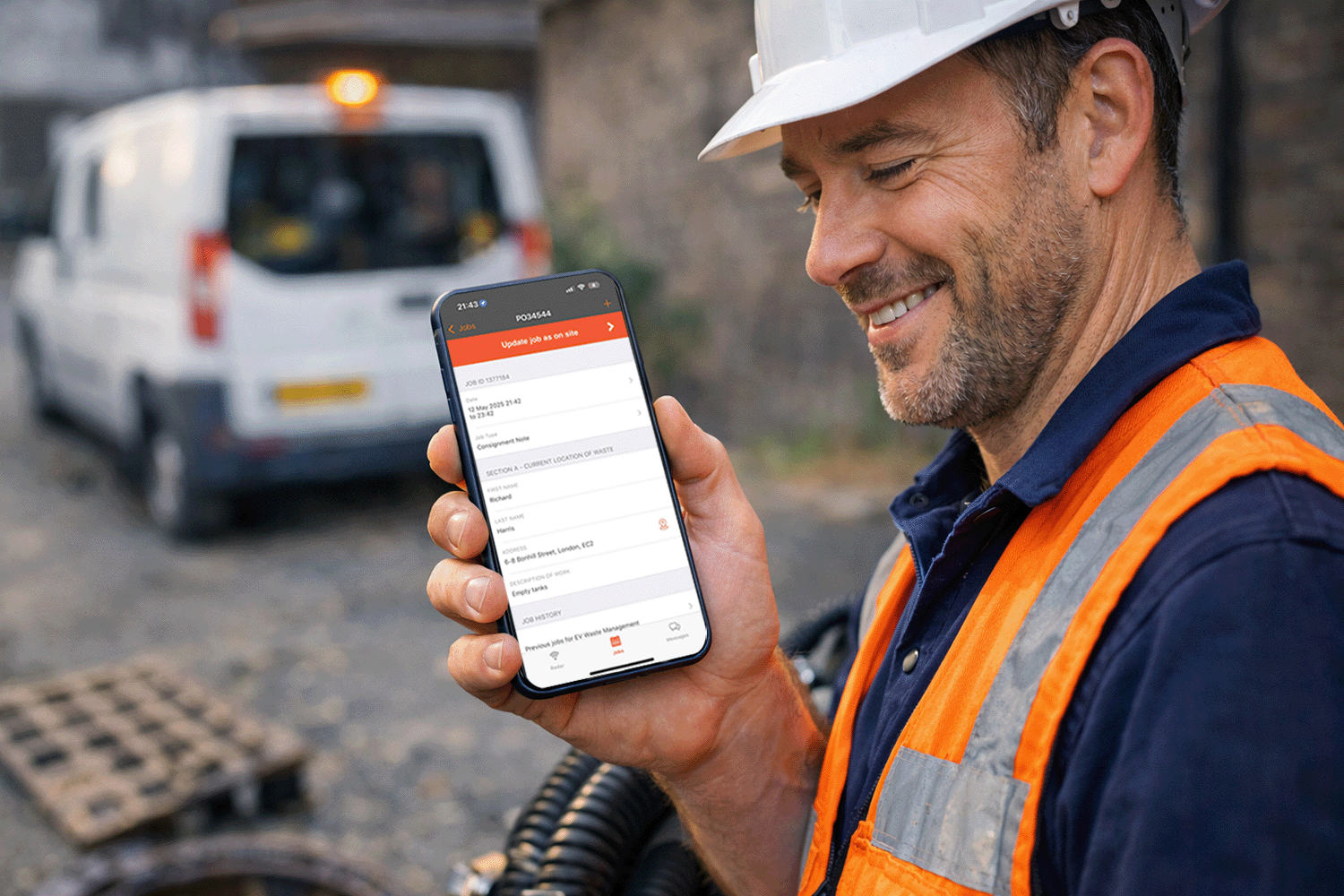
For drainage companies, that means jobs can be created, assigned, updated and completed with the information needed for approval. Engineers can add photos, notes, signatures, times, forms and completion details from site. Office teams can see progress without constantly calling engineers, and customers can be kept informed.
Payment is rarely just about the invoice. It depends on confidence. Okappy helps build that confidence by creating a clear audit trail from job request to completion.
1. Capture proof of work while the engineer is still on site
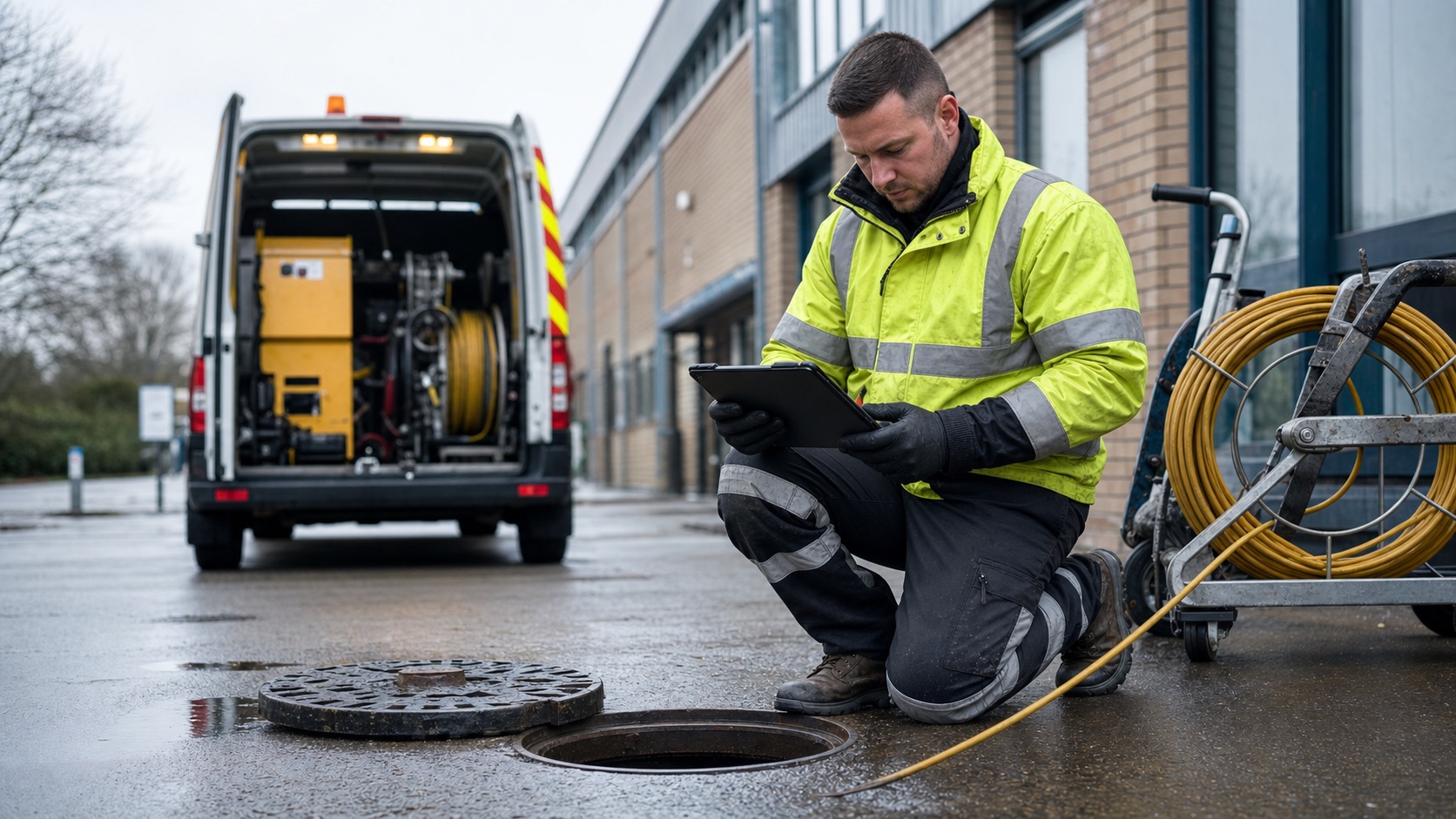
Drainage jobs often need visual evidence. A photo of the blockage, a completed job sheet, a customer signature or confirmation of additional works can make the difference between fast approval and weeks of back-and-forth.
With Okappy, engineers can update jobs from their mobile device, so the office is not waiting for paperwork to return. This reduces missing information and helps the invoice go out with the evidence attached. For facilities managers, that means fewer queries. For contractors, it means fewer delays.
2. Keep customers informed before disputes appear
Many payment disputes start earlier than the invoice. A customer expected one price, but the job took longer. A site contact approved extra work, but accounts did not know. A subcontractor attended, but the main contractor did not receive the notes.
Okappy helps by improving communication around the job as it happens. Updates, status changes and job information can be shared between the relevant parties, reducing surprises at the end.
3. Link subcontractors into the same process
Mid-sized drainage companies often rely on subcontractors to cover geography, specialist services or peak demand. But subcontractor paperwork can be one of the biggest causes of delay. If the subcontractor sends information late, the main contractor invoices late. If details are missing, the customer queries the invoice.
Okappy’s connected network approach helps contractors and subcontractors collaborate around the same job information. Work can be sent, updated and tracked without rekeying the same details into multiple systems.
4. Create a stronger audit trail for commercial conversations
Not every late payment is caused by poor admin. Sometimes there is a genuine commercial disagreement. But even then, a clear audit trail changes the conversation. Dates, times, photos, notes, forms and signatures help show what was requested, what was done and who was informed.
That is useful for drainage contractors trying to protect margins. It is also useful for customers who need to demonstrate responsible contractor management. Good records reduce ambiguity.
5. Move from reactive chasing to proactive control
The BBC report describes office teams spending more time chasing debt. That is a warning sign for any contractor. Every hour spent chasing missing paperwork, answering avoidable invoice queries or reconstructing job history is an hour not spent serving customers or winning work.
Okappy gives office teams better visibility over jobs, engineers and customer updates, helping them spot issues earlier. Is the signature missing? Were photos attached? Is the purchase order recorded? The sooner those questions are answered, the sooner the invoice can be raised cleanly.
A better experience for customers
For facilities managers, construction firms and other customers, the benefit is not just faster invoices for suppliers. It is better control. Clear job records help confirm what happened on site, support compliance and reduce the time spent fielding internal queries.
When contractors use Okappy, customers can receive more consistent information, clearer updates and better evidence. That supports stronger relationships between customers and suppliers, especially when budgets are tight.
The bottom line
Late payment is not just an accounts problem. It is often a workflow problem, a communication problem and a documentation problem. For drainage companies, where work is fast-moving and often complex, those problems can quickly affect cash flow.
Okappy helps by connecting the people involved in each job and keeping the evidence, updates and completion information in one place. That makes it easier for contractors to invoice promptly, easier for customers to approve work, and easier for everyone to avoid the costly drag of avoidable payment delays.
If late payments are taking up too much of your team’s time, the answer may not be more chasing. It may be a better process from the moment the job is booked.