
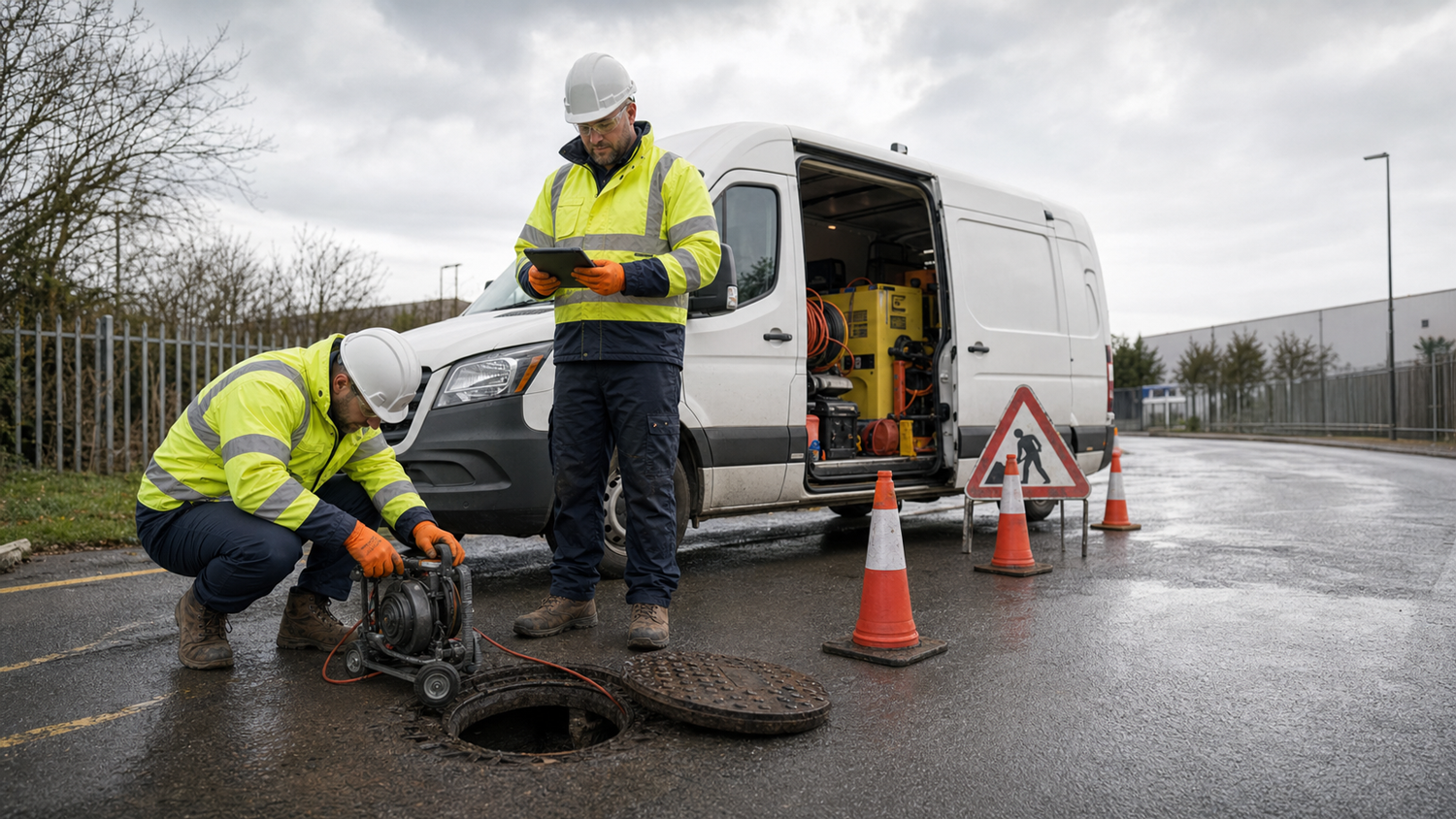
The UK drainage and wastewater sector is entering one of the most significant periods of investment and change in decades. For drainage contractors, facilities management providers, housing maintenance organisations and infrastructure businesses, the opportunities are substantial. However, so are the operational challenges.
Recent industry developments point to a common theme: organisations that can deliver work efficiently, provide robust audit trails and demonstrate compliance at scale will be best positioned to benefit from the next wave of investment.
AMP8 Is Moving from Planning to Delivery
The water industry’s AMP8 investment period is now well underway, with water companies across England and Wales beginning to mobilise major programmes of work aimed at reducing pollution, improving network resilience and modernising ageing infrastructure. Industry estimates suggest over £100 billion of investment could be delivered across the sector between now and 2030.
While much of the early AMP8 activity focused on planning, design and contractor onboarding, the sector is now moving into delivery mode. Major projects covering sewer upgrades, storm overflow reduction, wastewater treatment improvements and sustainable drainage systems are beginning to enter procurement and construction phases.
For drainage contractors, this means increasing demand for:
- CCTV surveys
- Drain cleaning and jetting
- Sewer rehabilitation
- Planned maintenance
- Emergency response services
- Asset inspections
- Environmental compliance reporting
The challenge for larger organisations is not simply winning work. It is demonstrating the operational maturity needed to deliver it consistently across multiple contracts, regions and subcontractor networks.
Storm Overflow Targets Are Driving New Operational Requirements
One of the biggest drivers of activity is the increasing focus on storm overflow performance.
The government and regulators have established ambitious targets to reduce storm overflow discharges, with water companies under significant pressure to demonstrate measurable improvements. Recent reporting highlights the need to dramatically reduce overflow incidents by the end of the AMP8 period.
As a result, asset owners are demanding better visibility of their networks and faster response times when issues occur.
For drainage businesses, this creates opportunities to move beyond reactive maintenance and offer:
- Preventative maintenance programmes
- Condition-based inspections
- Data-driven asset management
- Real-time reporting
- Compliance-focused service delivery
Customers increasingly want evidence, not promises. They want photographs, timestamps, inspection reports, completed checklists and auditable records that demonstrate work has been completed correctly.
The Compliance Burden Continues to Grow
Regulatory scrutiny remains intense across the wastewater sector.
Several water companies continue to face investigations, penalties and public criticism relating to wastewater performance, infrastructure maintenance and environmental outcomes. Recent industry developments have reinforced the importance of maintaining infrastructure effectively and providing evidence of compliance activities.
This has significant implications for contractors.
It is no longer enough to simply complete the work. Organisations increasingly need to demonstrate:
- Who carried out the work
- When it was completed
- What was found
- What corrective actions were taken
- What evidence was captured on site
For larger contractors managing hundreds or thousands of jobs per month, paper processes quickly become a liability.
Digital workflows are becoming essential rather than optional.
Ageing Infrastructure Means Demand Is Not Going Away
Many of the UK’s wastewater assets were built decades ago and are operating under increasing pressure from population growth, urban development and climate change.
The challenges facing utilities such as Thames Water continue to highlight the scale of investment required across the sector. Ageing treatment facilities, overloaded sewer networks and delayed infrastructure upgrades are creating a growing backlog of maintenance and improvement work.
For drainage contractors, this means sustained demand for:
- Sewer inspections
- Root removal
- Pipe repairs
- Drain lining
- Flood prevention work
- Capacity investigations
- Emergency response services
The opportunity is substantial, but organisations need the systems and processes to scale efficiently.
Sustainable Drainage Is Becoming Mainstream
Another notable trend is the increasing emphasis on sustainable drainage solutions (SuDS) and wider flood resilience programmes.
As extreme weather events become more common, local authorities, water companies and developers are under pressure to reduce surface water entering sewer networks. New investment frameworks are increasingly incorporating sustainable drainage and habitat restoration requirements.
This creates opportunities for organisations involved in:
- Surface water management
- Drainage design
- Flood prevention
- Environmental maintenance
- Infrastructure inspections
The ability to coordinate multiple contractors, maintain visibility across projects and capture evidence from the field will become increasingly important.
Labour and Skills Challenges Remain
One issue that receives less attention than funding is workforce capacity.
Many industry commentators are questioning whether the sector has sufficient skilled resources to deliver the scale of work planned during AMP8. Labour shortages, training requirements and supply chain constraints continue to be major concerns.
For large contractors, productivity improvements may be just as important as recruitment.
Questions organisations should be asking include:
- How much time is spent on administration?
- How quickly can jobs be assigned?
- How easy is it to reallocate resources?
- How much visibility do managers have of field operations?
- How effectively are subcontractors managed?
Technology cannot solve workforce shortages, but it can help organisations get more value from existing resources.
The Growing Importance of Connected Operations
Many drainage businesses still operate with disconnected systems:
- Emails for customer requests
- Spreadsheets for scheduling
- Paper forms for inspections
- Separate systems for invoicing
- Limited visibility across subcontractors
As contracts become larger and compliance requirements increase, these fragmented processes create operational risk.
Leading organisations are increasingly looking for ways to connect:
- Customers
- Office teams
- Field operatives
- Subcontractors
- Compliance teams
- Finance departments
A connected approach reduces duplication, improves communication and provides a clearer audit trail.
What This Means for Okappy Customers
For organisations using Okappy, many of these industry trends reinforce the importance of digital job management and connected field service operations.
Whether delivering drainage maintenance, sewer inspections, flood prevention work or wastewater infrastructure projects, customers are increasingly looking for:
- Real-time job visibility
- Faster communication
- Better compliance records
- Improved contractor management
- Digital forms and inspections
- Automated workflows
- Faster invoicing
As AMP8 investment accelerates and regulatory scrutiny increases, organisations that can demonstrate operational excellence will have a significant competitive advantage.
The drainage industry is entering a period where success will depend not only on technical expertise but also on the ability to manage information, people and processes effectively at scale.
For larger organisations, the next few years are likely to be defined by one question:
Can your operational systems keep pace with the opportunities ahead?